
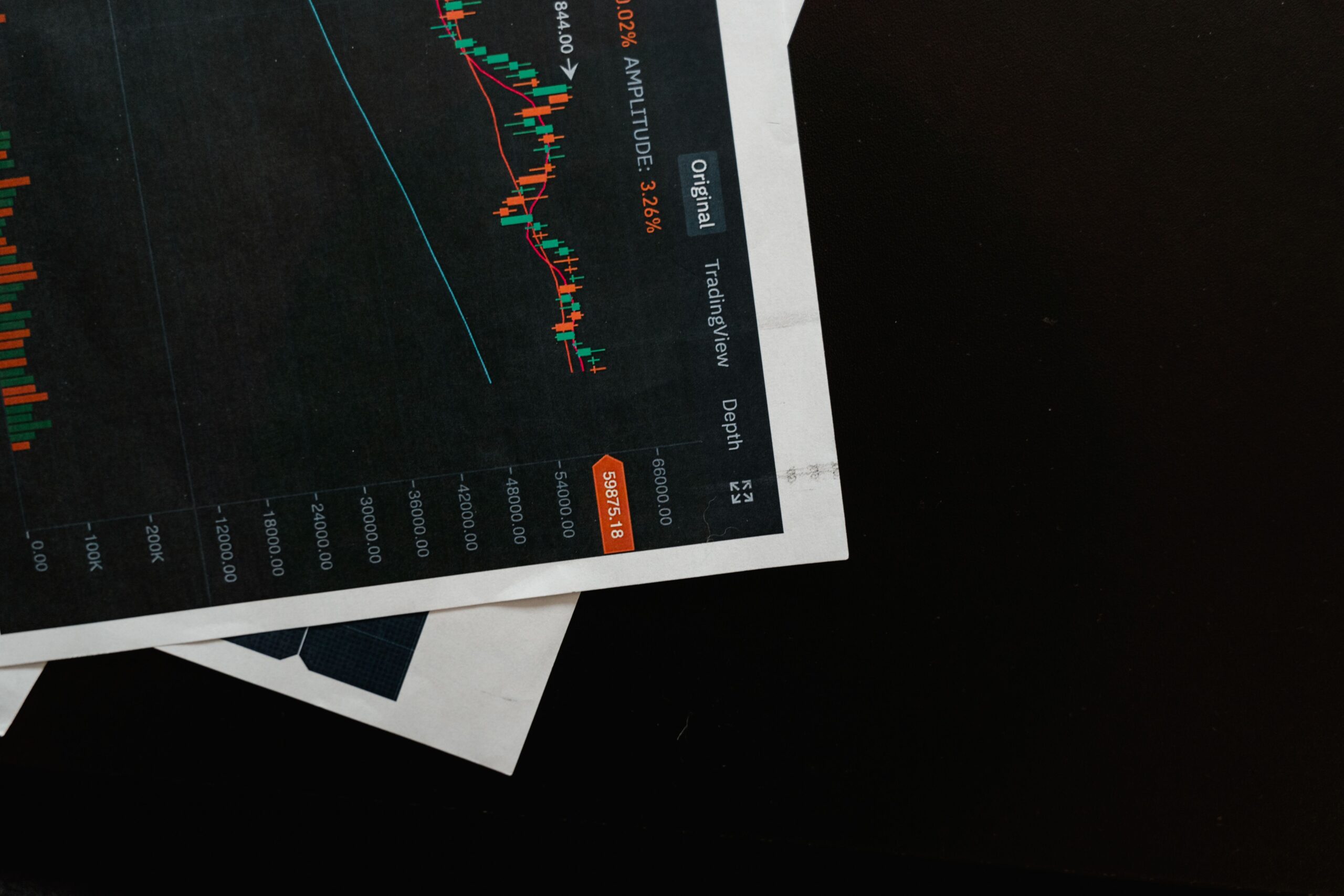
Choosing the best trading strategies in 2026 requires more than finding investments that recently increased in value. Successful trading involves managing risk, understanding market conditions, controlling costs, and following a consistent plan. The right strategy depends on your financial goals, available capital, experience, and tolerance for losses.
Some traders focus on short-term price movements. Others hold positions for several days or weeks. Long-term investors may prefer a slower approach that reduces the need for constant market monitoring. Each method offers different opportunities, costs, and risks.
In this guide, we compare popular trading strategies, explain their potential advantages and disadvantages, and explore how to evaluate risk-adjusted returns. You will also learn how to choose a strategy that fits your schedule and financial situation.
What Are the Best Trading Strategies in 2026?
The best trading strategy is one that matches your objectives and can be followed consistently. A strategy that works for an experienced full-time trader may be unsuitable for someone with a full-time job or limited capital.
Market volatility, interest rates, economic announcements, and company earnings can influence trading opportunities. However, no strategy guarantees profits. Even experienced traders experience losing trades and periods of poor performance.
Before choosing an approach, consider these important factors:
- Risk tolerance: Determine how much money you can afford to lose.
- Time commitment: Decide how frequently you can monitor positions.
- Trading costs: Account for commissions, spreads, financing charges, and applicable taxes.
- Market knowledge: Understand the assets and markets you plan to trade.
- Capital requirements: Choose an approach that fits your available funds without excessive leverage.
For additional financial education, visit Investor.gov, which provides resources about investment risks, fraud prevention, and informed investing decisions.
1. Day Trading: Short-Term Opportunities and High Risk
Day trading involves opening and closing positions within the same trading day. Traders attempt to profit from short-term price movements in stocks, currencies, futures, or other eligible financial instruments.
How Day Trading Works
Day traders often use price charts, technical indicators, trading volume, and market news to identify potential entry and exit points. They may place several trades during one session.
For example, a trader might buy a stock after a breakout above a resistance level. The trader may then close the position if the price reaches a predetermined target or falls to a stop-loss level.
Risk and Profit Potential
Day trading can produce rapid gains, but losses can accumulate just as quickly. Frequent transactions may increase costs. Sudden price movements can also cause stop-loss orders to execute at worse prices than expected.
This strategy generally requires significant attention, strong discipline, and a clear understanding of order execution. Beginners should practice with a simulated account before risking real money.
Best suited for: Experienced traders who can monitor markets actively and follow strict risk-management rules.
2. Swing Trading: Capturing Multi-Day Price Movements
Swing trading attempts to capture price movements over several days or weeks. Instead of reacting to every intraday fluctuation, swing traders look for broader short-term trends and potential reversals.
How Swing Trading Works
Traders may analyze support and resistance, moving averages, momentum indicators, chart patterns, and fundamental developments. They establish entry points, profit targets, and exit conditions before opening a position.
For instance, a trader might buy an asset following a pullback during an established uptrend. The position could remain open until the price reaches a target or the original trading setup becomes invalid.
Advantages and Disadvantages
Swing trading usually requires less screen time than day trading. It may suit people who have other professional responsibilities. However, positions remain exposed to overnight price gaps, unexpected announcements, and weekend developments.
Holding a position for several days does not automatically make it safer. The actual risk depends on volatility, position size, leverage, and the distance to the exit level.
Best suited for: Traders seeking a more flexible schedule while accepting short-term market risk.
3. Trend Following: Trading in the Direction of Momentum
Trend-following strategies aim to benefit from sustained upward or downward price movements. Traders attempt to enter an established trend and remain in the position while the market continues to move in the expected direction.
Common Trend-Following Tools
Moving averages, trendlines, price breakouts, and momentum indicators can help traders identify potential trends. Some strategies use a moving-average crossover as a signal. Others enter when the price breaks above a defined trading range.
For example, a trader may consider a long position when an asset trades above a rising moving average and confirms a breakout. An exit rule helps limit exposure if the trend weakens.
Risk and Return Considerations
Trend following can benefit from large market moves. However, it may generate repeated small losses when prices move sideways. False breakouts can also lead to unsuccessful trades.
Successful implementation requires patience and consistent rules. Traders should test whether their entry and exit signals work across different market conditions rather than relying on a single successful example.
Best suited for: Traders who prefer systematic decisions and can tolerate several small losses while waiting for stronger trends.
4. Breakout Trading: Identifying Potential Price Expansions
Breakout trading focuses on price movements beyond established support, resistance, or trading-range boundaries. The underlying idea is that a price leaving a consolidation range may begin a stronger move.
How to Identify a Potential Breakout
Traders often examine price structure and trading volume. A breakout supported by stronger volume may provide additional confirmation, although volume cannot guarantee continuation.
Suppose a stock repeatedly struggles to move above a particular resistance level. A trader might consider entering after a confirmed move above that level, with an exit plan if the breakout fails.
Important Risks
False breakouts are a major challenge. Prices can briefly cross a resistance level before reversing. Entering too early may also expose traders to unnecessary losses.
To reduce these risks, traders can define confirmation rules, avoid oversized positions, and establish invalidation levels before entering a trade.
Best suited for: Traders who understand chart patterns and can distinguish planned setups from impulsive decisions.
5. Position Trading: Focusing on Longer-Term Market Trends
Position trading involves holding positions for weeks, months, or sometimes longer. Traders focus on broader market trends, economic developments, company fundamentals, or longer-term technical patterns.
Unlike day traders, position traders generally do not need to react to every short-term price fluctuation. They may evaluate earnings growth, business performance, valuation, industry conditions, and major economic trends.
Potential Benefits and Risks
This approach can reduce transaction frequency and the pressure of constant monitoring. It may also allow a well-supported market trend to develop over time.
However, longer holding periods expose traders to economic changes, disappointing earnings, interest-rate movements, and substantial price declines. Capital may also remain tied up in a position for extended periods.
Position trading is not the same as passive investing. Traders still need entry criteria, exit rules, and periodic reviews to determine whether their original assumptions remain valid.
Best suited for: Traders who prefer a longer time horizon and can tolerate temporary price fluctuations.
6. Mean Reversion: Trading Potential Returns Toward Average Prices
Mean reversion trading is based on the idea that prices may move back toward a historical average after an unusually large deviation. Traders look for situations where an asset appears temporarily overextended relative to a chosen benchmark.
How Mean Reversion Works
Common tools include Bollinger Bands, relative strength indicators, historical price ranges, and statistical measures. A trader might investigate an asset after an unusually sharp decline, expecting its price to recover toward a previous range.
However, an asset that appears oversold can continue falling. A company may face serious financial problems, or a market may be entering a new trend. Historical averages are not guaranteed destinations.
Mean reversion strategies therefore require careful market selection, independent confirmation, and predefined exit rules. Traders should avoid assuming that every price decline represents a buying opportunity.
Best suited for: Experienced traders who understand range-bound markets, statistical testing, and the risk of persistent trends.
7. Algorithmic Trading: Using Rules and Automation
Algorithmic trading uses computer programs to identify signals, generate orders, or manage positions according to predefined rules. Strategies may rely on technical indicators, statistical relationships, or combinations of market data.
Benefits of Automated Trading
Automation can improve consistency and reduce some emotional decisions. It can also process information quickly and apply the same rules across many observations.
However, automation does not eliminate risk. Poorly designed algorithms can lose money quickly. Technical failures, unexpected market conditions, execution delays, and inaccurate historical assumptions can all affect performance.
Backtesting is useful, but historical results do not guarantee future returns. Traders should account for transaction costs, slippage, and overfitting. Paper trading and small-scale testing can help identify problems before deployment.
Best suited for: Technically skilled traders who understand programming, data quality, testing, and ongoing system monitoring.
Trading Strategies Compared: Risk, Time, and Profit Potential
The following comparison provides a general overview. Risk levels are illustrative rather than universal. Actual outcomes depend on the asset, market conditions, position sizing, and execution quality.
| Strategy | Typical Holding Period | General Risk | Time Commitment |
|---|---|---|---|
| Day trading | Minutes to hours | High | Very high |
| Swing trading | Days to weeks | Moderate to high | Moderate |
| Trend following | Days to months | Varies by system | Moderate |
| Breakout trading | Minutes to weeks | Moderate to high | Moderate to high |
| Position trading | Weeks to months | Market-dependent | Low to moderate |
| Mean reversion | Minutes to days | Moderate to high | Moderate |
| Algorithmic trading | Seconds to months | System-dependent | High during development |
No strategy consistently delivers the highest returns in every market. Instead, compare performance over multiple market environments and evaluate losses, trading costs, consistency, and risk-adjusted returns.
How to Manage Risk When Trading in 2026
Risk management is a core part of every trading plan. A strategy with promising entry signals can still fail if positions are too large or losses are allowed to grow without limits.
1. Define Your Maximum Acceptable Loss
Before entering a trade, decide how much capital you are willing to risk. Some traders use a small percentage of their account as a planning guideline, but the appropriate amount depends on individual circumstances. No percentage guarantees safety.
2. Calculate Position Size
Position size should reflect the distance between the entry price and the planned exit level. For example, if a trader has a $10,000 account and chooses to risk 0.5% on a trade, the planned dollar risk is $50.
That calculation does not mean the maximum possible loss is always $50. Gaps, slippage, and execution problems can result in a larger loss.
3. Understand Leverage
Leverage allows traders to control a larger position with less initial capital. It can magnify gains, but it also magnifies losses and may trigger forced liquidation. Beginners should understand margin requirements and avoid borrowing more than they can reasonably manage.
4. Diversify Carefully
Holding several positions does not automatically provide diversification. Assets that respond to the same economic factors may decline together. Review correlations and avoid concentrating too much capital in one market, industry, or trading idea.
5. Track Every Trade
Maintain a trading journal that records entry and exit prices, the original setup, position size, costs, and the reason for each decision. Regular reviews can reveal recurring mistakes and help determine whether a strategy performs as expected.
The FINRA investor education website offers additional information about brokerage accounts, margin, and investment risks.
How to Choose the Best Trading Strategy for Your Goals
Start by matching your strategy to your available time and experience. Someone who cannot monitor prices during working hours may find day trading impractical. A trader who dislikes holding positions overnight may prefer a different approach than swing or position trading.
Next, choose a market you understand. Stocks, foreign exchange, futures, options, and cryptocurrencies have different trading hours, liquidity characteristics, costs, and risks. Options and leveraged derivatives can be especially complex.
Finally, test your approach before committing substantial capital. Write down your rules, use historical data carefully, and practice with a demo account. Measure performance after costs and evaluate losing periods as well as profitable ones.
Also consider your broader financial priorities. Trading is not a guaranteed source of passive income. It differs from building an online business or exploring affiliate marketing. Even comparisons such as affiliate vs dropshipping or starting a dropshipping business involve different business risks and operating requirements. These activities should be evaluated separately rather than treated as interchangeable income strategies.
Common Trading Mistakes to Avoid
Even a carefully researched strategy can fail when traders make avoidable mistakes. Watch for these common problems:
- Chasing prices: Entering a trade because an asset has already risen sharply.
- Revenge trading: Taking impulsive positions to recover previous losses.
- Ignoring costs: Underestimating spreads, commissions, financing, and taxes.
- Overtrading: Opening positions without a valid signal or clear plan.
- Changing rules too quickly: Abandoning a strategy after a small number of unsuccessful trades.
- Trusting guaranteed-profit claims: Believing advertisements or social media posts that promise reliable returns.
Developing consistent habits is more useful than searching for a perfect indicator. A trading plan should specify when to enter, when to exit, how much to risk, and when to stop trading.
Conclusion: Which Trading Strategy Is Best in 2026?
The best trading strategies in 2026 depend on your financial objectives, experience, schedule, and ability to handle losses. Day trading offers frequent opportunities but demands close attention. Swing trading provides more flexibility, while trend following and position trading focus on larger market movements. Breakout, mean reversion, and algorithmic strategies require their own testing and risk controls.
Rather than selecting a strategy based on its advertised profit potential, evaluate its rules, costs, historical performance, and worst-case scenarios. Practice before risking real money, keep detailed records, and avoid excessive leverage.
Most importantly, never trade with money needed for essential expenses or emergency savings. There is no guaranteed way to profit from financial markets. A disciplined process can help you make more informed decisions, but it cannot eliminate the possibility of losing money.
Disclaimer: This article is for educational purposes only and does not constitute financial, investment, or tax advice. Trading involves risk, including the potential loss of some or all of your invested capital. Consider consulting a qualified financial professional before making investment decisions.